Digital Portfolios Go To Parent-Teacher Conferences

Digital Portfolios Go to Parent-Teacher Conferences
A student’s entry into he digital portfolio showing how she’s using a specific strategy to help improve her writing.

One of my goals when I started using digital portfolios in my 6th grade class was to improve communication with parents, and though I have my students email their parents every time they add an update, I’m not sure how often they look at them. Parent-teacher conferences seemed like a great time to show off the work and reflection that my students have been doing this year, and I’ve had some of the best conferences ever because of it.

Concrete Examples of Learning

Each students’ digital portfolio contains artifacts: videos, embedded Google docs, snapshots of the learning process, student-created image slideshows that show the steps in the process up to creating a final product. We try to use all the digital tools at our disposal to document the learning process. With these, we’re able to demonstrate a student’s growth and learning in ways that just weren’t possible with traditional portfolios. The portfolios contained mostly qualitative data (although some quantitative was included, like spelling assessments), so artifacts of the learning process that aren’t final, completed projects are included. For example, students have chosen to add snapshots of anchor charts in the classroom and used these as one piece of evidence that they are starting to implement a strategy, along with a snapshot of an annotated reading passage. My favorite example is a student included a video of himself attempting (and failing) to explain his process for solving a problem (complete with the student recording it in the background saying “Dude–I don’t think guess and check is a valid strategy here”), and then explaining how he can improve in his reflection.  Not only did this provide parents with concrete examples of the learning process, they also provided a glimpse into their child’s self-reflection and growth. During the conferences, I was able to use these artifacts to discuss progress with parents and demonstrate student learning and growth.

Promoting a Growth Mindset for Students and Parents

When I talk to colleagues about trying to promote a growth mindset amongst their students, parental expectations are often a hurdle. By setting up our digital portfolios so they were a documentation of students’ growth and progress over time toward specific goals, I was able to communicate to parents the importance of perseverance, self-reflection, and positive self-talk in the learning process. Rather than the conversation focusing on what the student wasn’t doing, the conversation was focused on what they were doing and the progress that they had made, however incremental it might have been, toward their goals. That shift in conversation, I think, relates to the transparency that comes from the digital portfolio. Parents have access to artifacts of student learning, as well as what the students learned from the experience (in their own words). That’s a pretty powerful combination.

Overall, I think that the digital portfolios made for a better set of parent-teacher conferences this year, both because of what my students created and what parents were able to take from them.

How have you used your digital portfolios to facilitate communication with parents?
When We Say a Student Can’t Learn

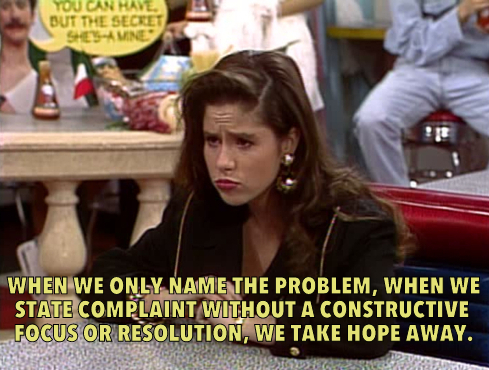
Via Saved by the Bell Hooks (the site might be the best thing ever)

Teaching is a profession that can be both extraordinarily rewarding and extraordinarily frustrating–sometimes simultaneously. Sometimes we’re tempted to throw our hands up in the air and proclaim that this student just can’t learn. And sometimes we do.

And when we as educators say that a student can’t learn, we’re saying a lot of other things, even if they’re not things we really mean or believe. It’s such a tiny statement–a throwaway line when we’re frustrated–and, yet, it has a million connotative meanings that don’t even occur to us as the words escape our lips.

When we say a student can’t learn, we’re saying that we’ve given up on her.

When we say a student can’t learn, we’re saying that his needs as a learner are not a priority.

When we say a student can’t learn, we might mean we don’t know how to teach her, but we’re saying that she needs to shape up and get with the program.

When we say a student can’t learn, we’re saying that we’ve tried all the tricks in our toolbox and are afraid to ask for help. Someone might judge us, might say we’re a bad teacher, might tell us that if we were more competent, built better relationships, went to this PD, we’d be fine. Look at the teacher down the hall. She’s fine.

When we say a student can’t learn, we’re saying “I’m not a bad teacher. I’m doing everything I know how.”

When we say a student can’t learn, we’re saying that we’re scared.

When we say a student can’t learn, we’re saying “I don’t know how to help this kid and the 24 others in my class.”

When we say a student can’t learn, we’re saying we don’t care about her.

When we say a student can’t learn, we’re saying that we are tired.

When we say a student can’t learn, we’re saying he’s not my problem.

When we say a student can’t learn instead of “I don’t know what to do, and…”, “I’ve tried everything I know how, but…” or “I don’t know how to teach her, so…” we’re saying that it’s easier to put the responsibility for making sure everyone learns on the student rather than on ourselves.

When we say those words, we’re saying so many things. Deciding what we really mean and taking action will determine how successful we are in teaching that student.

When we hear someone else say those words, we need to take a step back and withhold judgement and offer our support as colleagues to help turn the discussion toward something proactive and helpful. In order to try to build a school culture where people feel safe saying “I don’t know what to do” and asking for help, we need to offer that help and support freely and without judgement. We can’t look at our colleagues and say “This teacher can’t learn,” either.

The Power of Our Words

I’ve been thinking a lot lately about how we, as teachers, talk about students amongst ourselves. Quick conversations in the hall, longer ones in the staff room or in a classroom. In full-fledged meetings with our colleagues. The more I think about it, the stronger my feeling that not only does what we say matter, but how we say it matters even more.

The words we use have power. They can color the perception that we, or others we are talking to, have about the student.

And, in the moment we’re having a conversation, we have a choice. And it’s a choice we need to make every time we have a conversation about a student.

We can refer to a student who just plagiarized an assignment as “slick” and ask for him to have 1:1 supervision during the next assessment.

Or we can say we’re worried that a 6th grader felt the need to cheat and ask what’s going on with him. We can ask our colleagues. And we can ask the student.

We can label a student as lazy.

Or we can ask why she’s choosing to do the minimum work required. Are her skills low? Does the assignment not interest her? Is she afraid of failing or putting herself out there?

We can call a student emotional.

Or we can remember that the student is 12, and the mess of hormones that flow through a 12 year old’s body and all the changes those hormones cause makes it hard to regulate emotions. Then we can look for ways to embed social-emotional learning into our curriculum.

We can call a student a know-it-all.

Or we can talk to colleagues about ways to channel that student’s enthusiasm into something that will give them more positive responses from teachers and peers and help make the student a part of the classroom community.

All of that said, I’m by no means innocent of this. We all get frustrated and we’ve probably all at one point or another labeled a student in a way we wish we hadn’t. We’ve complained about a student’s behaviors and attitudes, rather than looking for the best way to help him or her. As teachers, we need to make an effort to shift our mindsets from deficit-focused to solutions-focused. And for those of us who are actively working on that, we need the courage and the grace to offer other perspectives when our colleagues talk about students in ways that may make if difficult to find a way for that student to be successful.

How do you talk to teachers who may be discussing students in ways that you’re uncomfortable with?