Flipped Classroom Mini-PLC

Image by DuEnLiJu; Creative Commons 1.0

This year I’m not in a classroom as much as I was last year. I’m not teaching a core content class, I’m only doing small group intervention. That means that I have more time to coach, but I still miss the classroom. A lot. So, when I went to a workshop about using flipped classroom methodologies along with mastery-based learning, I was really excited. But I was also really disappointed. Where could I possibly use this? Certainly not as a coach.

But then! A math teacher I work with, Robin, came to me with a problem: Her students had a wide range of abilities, and she had exhausted her toolkit of differentiation techniques and activities. We talked for a while about what she wanted her students to achieve, what she had tried already, and why she thought it wasn’t working. It came down to students being in very different places in terms of their content mastery. No matter what type of instruction Robin tried, someone always felt frustrated. Kids who got things quickly didn’t feel sufficiently challenged. The kids who struggled were overwhelmed by homework and needed more coaching and support to do things correctly. Jumping in and trying to put together a flipped classroom and looking at mastery learning seemed like a great idea.

Reading About the Flipped Classroom: Starting a Mini-PLC

Our first step was to do some research together. I had dabbled in using flipped classroom techniques, but had never done it fully. She had never done it before either. After some quality time with Google and looking through the resources that I had from the workshop, we settled on the book Flipped Learning for Math Instruction by Jonathan Bergman and Aaron Sams (ISTE, 2015). We each ordered a copy and agreed to read it over winter break.

If you are a math teacher and thinking about using the flipped classroom model, I can’t recommend this book highly enough. It is clear and concise, and gives plenty of real examples from classrooms. The book is organized in a helpful manner, taking a teacher through a logic progression of beginning to implement the flipped classroom model and all the way through extending the model to using it as a part of a mastery learning environment.

Taking The Next Steps for a Flipped Classroom

As Robin and I mapped out how she would implement the flipped classroom for math, I started thinking about how I could apply it to my own teaching. I’m still not sure if I can make it work for intervention, but I can try it out in my graduate class. So we’re trying it out together and supporting each other along the way. I’m excited to work together with Robin, even though we’re implementing the flipped classroom model in vastly different settings!
Tiny Successes

Channel R at the English language Wikipedia [GFDL, GFDL or CC-BY-SA-3.0], from Wikimedia Commons
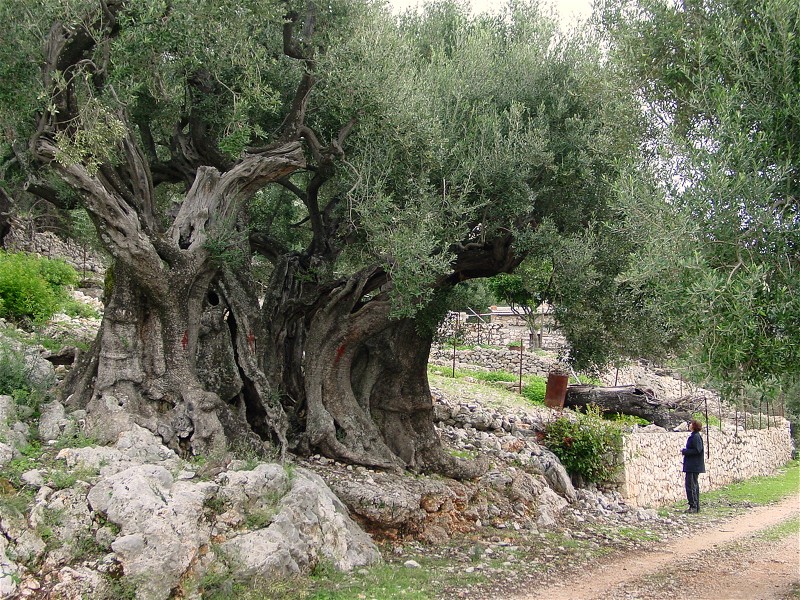
My first teaching job was in a Catholic school for low-income girls on the Lower East Side. My boss, Connie, who was one of the co-founders the school in the early 90s (back when she was still a nun), was an amazing woman. She taught me a lot about teaching and about building relationships with students. But one of the most important things I learned from her was about success. “We’re growing olive trees, not marigolds,” she would frequently say. She said it a faculty meetings, to members of the board, to parents, to the principal as she agonized over our test scores. She said it with the same fervor and faith with which she read 1 Corinthians chapter 12 on the first day of school every year. She said it with the voice of a true believer. And she made me believe it too: That success isn’t only measured in huge leaps, in fast growth and quick, dramatic changes; it is also measured in tiny, incremental steps forward. Growth you don’t even notice or successes that are so small, you could miss them if you weren’t on the lookout. Growth that takes time, but makes something amazing, sturdy, and enduring.

I’ve had several of these moments in the past two weeks and it reminded me how important it is to celebrate the small successes, not just the large ones, and that tiny steps toward growth are just as important as big ones.

When a student stops in to ask for help on an assignment that is a perfect match for a strategy we’ve been working on for weeks and then asks for help with it–even if he’s not employing the strategy independently or hasn’t really tried to use it–that’s a success.

When a teacher who has been resistant to working with me on differentiation invites me into her classroom “just to see a bit”, that’s a success.

When a student chooses to showcase a tiny change she’s noticed in her writing in her portfolio, that’s a success.

When a student writes down his homework in his planner (even if he doesn’t get it done), that’s a success.

When a grad student who seems to have been ignoring feedback on lessons makes one small change that shows she’s starting to get it, that’s a success.

Sometimes teaching can be really overwhelming, especially when you’re teaching students who struggle. Growing olive trees is hard work. You care for them, and you try to provide the right climate and the right food, but it could be a long time before they bear fruit. When we notice the tiny successes in our students, those small, but important, steps forward, we notice our students and their efforts. When we notice those tiny steps, we’re reminded that when we acknowledge tiny successes, they can feel like huge leaps forward.

What tiny successes have you seen recently?

Checking-in in the New Year

Skyview Atlanta
The second-best picture I took in Atlanta. Again, there’s a metaphor here. I’m sure of it.

At the beginning of the school year I set goals for myself as a teacher. Right now I’m asking my students to check in on their progress toward their goals in their digital portfolios and the teachers I coach to reevaluate the goals they set at the beginning of the year, so I’m checking in on my progress as well. I also have finally set a coaching goal for myself after attending Pete Hall’s Building Teachers’ Capacity for Success workshop through ASCD.

Improve my behavior management for my “challenging” class

This is hard to admit, but I haven’t done a great job following through with this one. I’ve done many of the things that I said I was going to do, but in the more short term. The problem is, I know exactly (or at least partially) why things I’m trying aren’t working. I’ve been so focused on finding strategies to manage behavior and making those strategies work, that I’m not focused enough on planning engaging lessons to meet my students’ needs. I’m not walking into class with no plan, but I’ve been so focused on anticipating behaviors and what strategies I would use to manage these behaviors, that the content and concepts in the lessons I’ve been planning have been, well, less than stellar. So when my strategies work, the activities I have planned aren’t enough to hold the students’ attention and keep them on that good track. It hurts to admit that I dropped the ball here, but it happens and I can fix it. For the remainder of the year I want to keep implementing the strategies that are working, but refocus my efforts on lesson planning so that my students can be successful.

Better integrate the technology I have available to me into my lessons, including finding more ways to leverage “regular” technology as assistive technology for my students.

Here I’ve done much better. I’ve implemented digital portfolios for my students and I’ve been slowly refining them so they become spring-boards for student self-reflection and learning. Yesterday a student exclaimed as he had realized that our work with SRSD and Close Reading had been just as much about improving his ability to manage and regulate his attention as they had been about his reading and writing skills after going through a variety of digital and paper artifacts showing his work. I also am now able to very easily share student work with a parent who has moved back to Denmark ahead of the rest of the family.

I’ve also curated a number of resources for students on my Schoology pages for my learning support classes, including videos and interactive games (usually created by others), as well as graphic organizers (usually created by me). What’s even better is that some students are seeking out and using these resources. I think my next step here is to add more content that I’ve created (or that my students have created) to these resource pages, using podcasting, screen capture, and other methods.

Finally, the coaching goal: Go into classrooms regularly (1-2 times per week) for either very quick (30-45 seconds) or brief (5-15 minute) visits and follow up on these visits with teachers.

Or actually doing what Pete Hall calls “Rounds” and “Walk Throughs”. This goal sounds simple, but it involves a lot: coordinating schedules, figuring out “look-fors”, etc. But the biggest reason I haven’t done this is that I haven’t felt comfortable. I wasn’t given a clear description of what I would be doing as a coach at the beginning of the year, nor was it explained to teachers, so I spent most of the first semester in meetings with teachers, talking and building relationships. Now that I feel like I have a job description (even if it’s self-created with the help of a workshop and a book) and have built up fairly good relationships with many teachers, it will, I hope, be easier. The short workshop I led on Tuesday afternoon about checking in and reevaluating goals from the beginning of the year will also provide context for my visits.

How are the goals you set for your own teaching at the beginning of the year going? 

Instructional Coach Training: #BTCFS

Atlanta Metro Station
One of the best photos I took in Atlanta. Not sure what it has to do with my post. There’s a metaphor there somewhere. I’m sure of it. CC-BY-NC

At the beginning of the school year I wrote a post about my students’ goal setting as well as my own. When I wrote that post, I only talked about my goals for myself as a teacher, but didn’t discuss the goals I set for myself as an instructional coach. That’s really because at the beginning of the year I wasn’t sure what the standard was for instructional coaches. Where was I going? I really wasn’t sure. I didn’t have a job description to help focus me, and while I have been a literacy coach before, it was in a completely different school environment where that was my only role. In my initial meeting this year with my principal, she suggested that I look around for professional development opportunities about becoming a better instructional coach. Excited to learn more, I immediately started researching and came up with the Building Teachers’ Capacity for Success workshop with Pete Hall through ASCD. I knew that the title sounded extremely familiar, and that’s because I picked up the book at ASCD last year after my principal had first suggested that being an instructional coach might become part of my job.

Reading the book was eye opening, but the workshop with Pete was 1000 times better than reading the book. If you ever get the chance to see him present, I highly recommend it. He’s passionate, energetic, and friendly (he also has good advice about running routes in Atlanta and possibly in the other cities where he presents. Warning though: he did try to convince me to run the stairs in the Georgia Tech stadium. Not happening). I’m still processing everything that I learned over the two days, but I think I have a “Top 5” list of things I learned, all of which led me to the coaching goal I set for myself at the end of the workshop. For things that others learned , check out #BTCFS on Twitter.

5. Find the “Green Stars”

You know the teacher down the hall? The one who seems to have taught the same lesson for the last 20 years? Or the one who seems to have no control of her class? Even when we’re trying to be supportive, sometimes working with these teachers can be frustrating. But there’s good there. And as coaches and administrators we need to see that good and remind ourselves of it. Then we need to use that good–that green star–to spark change and growth. This helps us to have a growth mindset with our teachers just like we have with our students.

4. Self-reflection is the key to teacher growth

If you’ve been reading this blog for any period of time you know I’m a fan of self-reflection. For me, for my students, for educators in general. And I think on some level I understood the idea that in order to develop as educators we need to reflect on our teaching. I was also on board with the idea that teachers need to be taught how to self-reflect. What was new was the idea that we can put the ability of teachers to self-reflect on a continuum, and that where they are in terms of their ability to self-reflect determines how we interact with them and the role we take on as coaches, mentors, and administrators. For example, I would take on a totally different role with a teacher who is able to easily reflect on their instructional practice to improve it (a teacher in the Refinement Stage) than I would a teacher who isn’t really able to see the connection between what they’re doing and student outcomes (a teacher in the Unaware Stage). I’m also wondering how I can use the Continuum of Self-Reflection with my grad students and with their practicum supervisors to help support them in their development toward becoming more self-reflective educators.

3. Building teachers’ capacity is the key to student growth and success

Teachers matter. They matter a lot. There’s tons of research on this. Too often, however, we try to get teachers to improve their practice by using carrots and sticks, rather than actually guiding and supporting them in improving their practice. In order to ensure student success we really need to support our teachers in their professional learning and growth based on where they are on that Continuum of Self-Reflection. And to do that…

2. Instructional coaches and administrators need to work together to support teacher growth
Instructional Coach & Admin work together to support a teacher
A visual representation of how the administrator and the coach work together to support a teacher in the Refinement Stage. CC-BY-NC

Administrators and coaches really need to be partners in helping to teachers to improve their faculty’s level of self-reflection and their skill as educators. If administrators and coaches are on the same page with how they work with teachers and are clear about their individual roles and transparent with the staff about those roles, they can be really effective in fostering professional growth in an environment that is supportive rather than punitive. Again, I’m wondering if I can stretch this model to apply to working with my grad students. Maybe with me as the instructor in the role of the administrator with my practicum supervisors in the role of coach.

1. And not but

Of everything I’ve learned, this may be the smallest thing that makes the biggest deal. While there were a number of “ah-ha” moments during the two day workshop, this one was the biggest. And it’s such a tiny change to make when I interact with teachers (and with students and parents). As educators, we like to use the “start with a compliment” format. Then comes the “but”. However, the word “but” can make people defensive and angry. “But” can make the compliment feel like lip service. “And”, though. “And” says, “You really are doing these things right. Here’s how you can grow.”

I’m really excited to start implementing this framework, and I hope I can get others on board as well. Next week I’ll share my goal for myself as a coach and how I plan to achieve it.

What are your strategies for coaching teachers? How do you foster self-reflection with faculty?

The Dream of Differentiated PD

The problem with traditional PD--why we need differentiated PD
From Jen Henga via Flicker

I think the thing that stuck with me the most when I went to CGC was the idea that everyone learns. And everyone means everyone–students, teachers, administrators–we’re all learners. To me, the CGC principle that learning is scaleable is the most important one for me this year in my new role as Instructional Coach as well as Learning Specialist. I think that trying to develop differentiated PD for the faculty is one of the most important things I can do this year to ensure that everyone learns, both because I’m modeling what I want teachers to do and because I want teachers to get what they need from PD and find it useful. So I sent this out into the Twitterverse:

Crickets.

I can’t believe that no one is trying this. It could be I didn’t use the right hashtags. It could be that I tweeted at the wrong time of day. Maybe I need to follow some of Matt Renwick’s tips here. But I came up with nothing. So I’ve been muddling through on my own, and there are a couple places where I’m still stuck.

Readiness: How Do I Know What They Don’t Know?

I work with people who come from a wide range of backgrounds and experiences. They’ve been teaching anywhere from a couple of years to a couple of decades. They have various comfort levels with differentiation and various opinions on whether or not it even has a place in our school. I’ve used a variety of different tools to try to get at this, but I’m always left with the following questions:

  • How easy is it for teachers to be vulnerable with their colleagues and admit they don’t know?
  • If part of the purpose of preassessment is to preview and maybe show learners that they have something to learn about the topic, how do you make sure that people who may see themselves as knowledgable (but may not be) feel neither talked down to or threatened?

When I tried to create a preassessment questionnaire for my last PD session, one colleague gave me the feedback that it was “too intense and detailed” and might “scare people off” or make the “feel threatened”, another colleague gave me the advice that it didn’t cover enough and really wouldn’t give an adequate preview of what people would learn. I ended up not handing it out, leaving me feeling unprepared and like I wasn’t modeling what I wanted the staff to do.

I think today this might be more successful. I used exit tickets from our last session to group people by interest. We’ll see how it goes.

Interest: How Do I Keep Things Relevant?

I’m pretty good at helping teachers develop differentiated units and projects, but there are definitely areas that are outside my comfort zone and knowledge, most specifically subjects outside of the MESH (Math, English, Science & Humanities) or core subject domains. I’m not sure what to do that will be relevant to disciplines like PE, Art, and Music,, and sometimes Modern Languages, but I do want to make sure these teachers feel included and like a part of our professional learning community.

Things I’m trying this year:

  • Flexible groupings: grade levels, subject areas, general interests.
  • Using teacher-leaders from those disciplines to act as leaders or experts in small groups.
  • Talking to these teachers: what do you want? What can I do to make this relevant?

The thing is though, I’m still up against years of these teachers feeling not included or marginalized, and that’s the added piece here that I’m really not sure how to deal with.

Taking Risks

So trying all of this means I’m taking some risks with how I’m structuring PD. Some of them may fail, and I’ll reflect from them and learn from them. However, I’m worried that by taking those risks and failing to get it right I might make people feel like their time is being wasted. And we all know how happy teachers are when their time is being wasted (we’ve all been there and been really angry about it). So how do I find the balance between taking risks with how I’m delivering PD and playing it safe with my use of my colleagues’ time? I wonder if this is why so many schools and districts stick with the “sit and get” model of PD. People may not always enjoy it, but they’re not complaining too much.

Any thoughts? If you lead PD at your school, how do you approach these situations?