Digital Portfolios Go To Parent-Teacher Conferences

Digital Portfolios Go to Parent-Teacher Conferences
A student’s entry into he digital portfolio showing how she’s using a specific strategy to help improve her writing.

One of my goals when I started using digital portfolios in my 6th grade class was to improve communication with parents, and though I have my students email their parents every time they add an update, I’m not sure how often they look at them. Parent-teacher conferences seemed like a great time to show off the work and reflection that my students have been doing this year, and I’ve had some of the best conferences ever because of it.

Concrete Examples of Learning

Each students’ digital portfolio contains artifacts: videos, embedded Google docs, snapshots of the learning process, student-created image slideshows that show the steps in the process up to creating a final product. We try to use all the digital tools at our disposal to document the learning process. With these, we’re able to demonstrate a student’s growth and learning in ways that just weren’t possible with traditional portfolios. The portfolios contained mostly qualitative data (although some quantitative was included, like spelling assessments), so artifacts of the learning process that aren’t final, completed projects are included. For example, students have chosen to add snapshots of anchor charts in the classroom and used these as one piece of evidence that they are starting to implement a strategy, along with a snapshot of an annotated reading passage. My favorite example is a student included a video of himself attempting (and failing) to explain his process for solving a problem (complete with the student recording it in the background saying “Dude–I don’t think guess and check is a valid strategy here”), and then explaining how he can improve in his reflection.  Not only did this provide parents with concrete examples of the learning process, they also provided a glimpse into their child’s self-reflection and growth. During the conferences, I was able to use these artifacts to discuss progress with parents and demonstrate student learning and growth.

Promoting a Growth Mindset for Students and Parents

When I talk to colleagues about trying to promote a growth mindset amongst their students, parental expectations are often a hurdle. By setting up our digital portfolios so they were a documentation of students’ growth and progress over time toward specific goals, I was able to communicate to parents the importance of perseverance, self-reflection, and positive self-talk in the learning process. Rather than the conversation focusing on what the student wasn’t doing, the conversation was focused on what they were doing and the progress that they had made, however incremental it might have been, toward their goals. That shift in conversation, I think, relates to the transparency that comes from the digital portfolio. Parents have access to artifacts of student learning, as well as what the students learned from the experience (in their own words). That’s a pretty powerful combination.

Overall, I think that the digital portfolios made for a better set of parent-teacher conferences this year, both because of what my students created and what parents were able to take from them.

How have you used your digital portfolios to facilitate communication with parents?
Tiny Successes

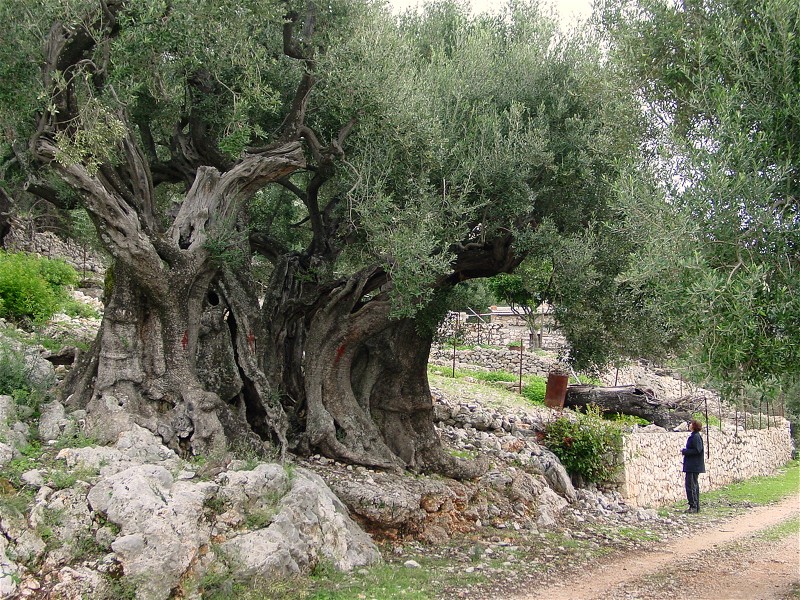
Channel R at the English language Wikipedia [GFDL, GFDL or CC-BY-SA-3.0], from Wikimedia Commons
My first teaching job was in a Catholic school for low-income girls on the Lower East Side. My boss, Connie, who was one of the co-founders the school in the early 90s (back when she was still a nun), was an amazing woman. She taught me a lot about teaching and about building relationships with students. But one of the most important things I learned from her was about success. “We’re growing olive trees, not marigolds,” she would frequently say. She said it a faculty meetings, to members of the board, to parents, to the principal as she agonized over our test scores. She said it with the same fervor and faith with which she read 1 Corinthians chapter 12 on the first day of school every year. She said it with the voice of a true believer. And she made me believe it too: That success isn’t only measured in huge leaps, in fast growth and quick, dramatic changes; it is also measured in tiny, incremental steps forward. Growth you don’t even notice or successes that are so small, you could miss them if you weren’t on the lookout. Growth that takes time, but makes something amazing, sturdy, and enduring.

I’ve had several of these moments in the past two weeks and it reminded me how important it is to celebrate the small successes, not just the large ones, and that tiny steps toward growth are just as important as big ones.

When a student stops in to ask for help on an assignment that is a perfect match for a strategy we’ve been working on for weeks and then asks for help with it–even if he’s not employing the strategy independently or hasn’t really tried to use it–that’s a success.

When a teacher who has been resistant to working with me on differentiation invites me into her classroom “just to see a bit”, that’s a success.

When a student chooses to showcase a tiny change she’s noticed in her writing in her portfolio, that’s a success.

When a student writes down his homework in his planner (even if he doesn’t get it done), that’s a success.

When a grad student who seems to have been ignoring feedback on lessons makes one small change that shows she’s starting to get it, that’s a success.

Sometimes teaching can be really overwhelming, especially when you’re teaching students who struggle. Growing olive trees is hard work. You care for them, and you try to provide the right climate and the right food, but it could be a long time before they bear fruit. When we notice the tiny successes in our students, those small, but important, steps forward, we notice our students and their efforts. When we notice those tiny steps, we’re reminded that when we acknowledge tiny successes, they can feel like huge leaps forward.

What tiny successes have you seen recently?

Student Voice and SRSD

IMG_20141217_090628

I use SRSD (Self-Regulated Strategy Development)  as my primary way of teaching writing to my students. There are a lot of reasons why I love it. It’s research validated. It connects easily to whatever type of writing instruction is happening in their classrooms–workshop models, process writing, etc.–so the skills they learn are easily transferred. It provides just the right amount of structure for students who need it, while not being constricting for students who don’t (check out the article in AMLE Magazine by Pooja Patel & Leslie Laud for more info). The best part, though, is that it’s flexible. We’ve been working on close reading for a while and I’ve asked students, as part of Sunday Cummins‘s model of close reading, to follow up their reading with a written response. Of course, I used the familiar TIDE organizer that we’ve been using all year, but the results weren’t what I had hoped.

We had done everything right. We had discussed the strategy. I worked with them to develop their background knowledge, and made connections between our work with close reading and our work with using TIDE to help us plan and organize paragraphs. We set goals. I modeled, both by looking for the parts of the paragraph in a model piece of writing and by using the active board to model writing a response. I modeled my own positive self-talk as I wrote. And I provided supports and scaffolds. Their writing still didn’t make the connections and inferences I wanted them to make, so I decided to turn it over to them. And they took me somewhere really amazing.

students creating a poster for writing about close reading

I asked them to make a poster that would teach someone else about how to write about close reading, and to use a metaphor to do it (an idea I got from Pete Hall at the BTCFS workshop). Writing about close reading, they said, was like an iceberg. Above the water, they said, is the main idea, supported by the “pasta words” (what Cummins calls the important details). Under the water, they told me, was the synthesis–the conclusions they draw that can’t be found directly in the text. After they made their iceberg, they added images to help them. A boat called the S.S. Annotation to remind them to use what they had written on the text to help them identify the pasta words and to remind them to use their “I wonder…” annotations to help them make connections and draw conclusions. They also added an airplane (with flaming jet engines, of course), where they wrote what makes a good main idea. They added post-its to explain all of the parts, and then explained their new strategy to a colleague of mine from the ELL department who happened to be walking by the classroom.

Using SRSD with close reading

The next class when we went to work on writing, it was a huge change. They had ownership of the type of writing I was asking them to do, and of the strategy I had asked them to employ. When we went through the modeling and practice, and the results were so much better than the first time. All because they took over defining the parts of the text themselves. They had the background knowledge, I just needed to find a way to empower them make the connections between the two topics that would help them take ownership of their writing.

close reading & SRSD


They really came up with something great.

How do you empower your students to make connections and take ownership of their learning?